Entomology Research Museum U.C. Riverside
A place to wonder and marvel at the unique life histories of the arthropod fauna. Enjoy the graphical descriptions including close-up shots and video clips of insects and other arthropods.
Here are the latest arrivals:
(click a card to see more)
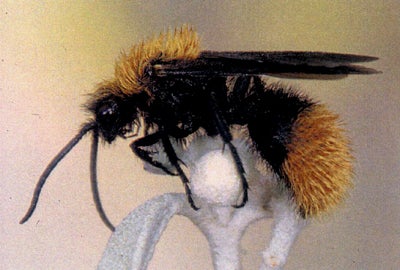
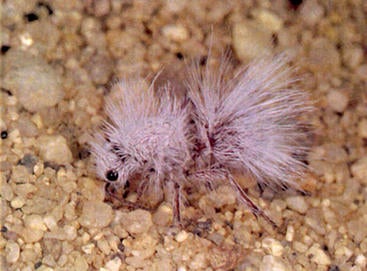
Velvet Ant
Order Hymenoptera Family Mutillidae
Prepared by Doug Yanega, photos by Greg Ballmer
Velvet Ants are actually a type of parasitic wasp, and the family occurs over most of the world. People are ALWAYS asking about these wasps, especially the eastern US species known as "The CowKiller", Dasymutilla occidentalis. This particular wasp lays its eggs in the nests of the "Cicada-Killer" wasp, Sphecius speciosus (and some other large ground-nesting sphecid wasps) where its larva will eventually eat the cicada-killer larva. Over 450 other species occur in North America, most between 525 mm long. Nearly all of them lay their eggs in the nests of ground-nesting bees and wasps, especially in the Southwestern deserts. Most species are red and black, orange and black, or white and black, but there are other color patterns; for most species this is warning coloration (called "aposematism"), associated with the fact that females (which are always wingless) pack a VERY potent and painful sting. One of the more striking exceptions is one of our Southwest species, Dasymutilla gloriosa (left-hand photo), whose long white hairs apparently mimic creosote bush seeds, so it is actually camouflaged. Some people consider Mutillid stings to be the most painful, but this is always subjective. The males all have wings (righthand photo), and do not sting, as is true of almost all male wasps. Nonetheless, they often have small hooks at the tip of the abdomen which they will jab you with if you handle them. Both males and females also make a sort of chirping-squeaking noise when handled, produced by a special structure called a stridulitrum which is on the upperside of the abdomen, at the junction between two segments.